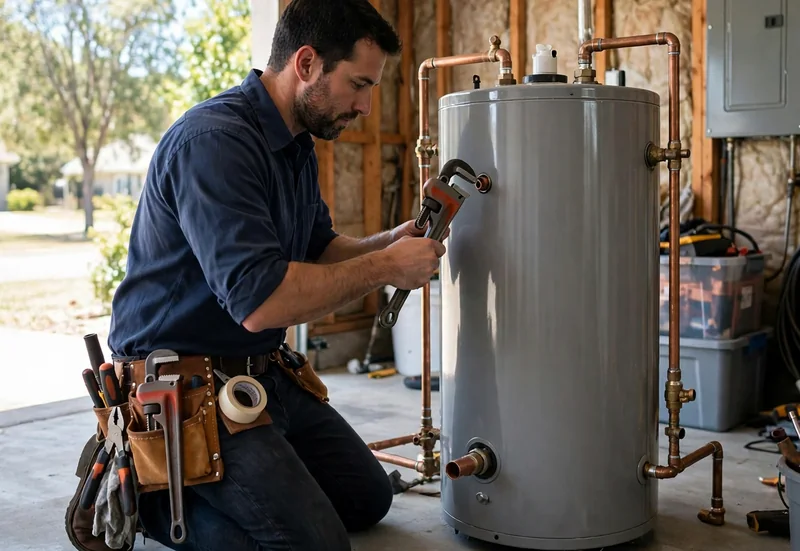
The short answer: Most water heaters warn you before they quit. The common signs are rumbling or popping sounds, hot water that runs out faster than it used to, rusty hot water, moisture or rust at the base, and an age past ten years. Any one sign may be fixable. Several together usually mean replacement planning will save you money and a cold-shower emergency.
Noise is sediment talking
A rumbling or popping tank is boiling water trapped under a layer of sediment at the bottom. That sediment insulates the water from the burner or elements, so the unit runs longer, wastes energy, and overheats the tank bottom, which shortens its life.
Flushing the tank can quiet a younger heater and restore some efficiency. On an old tank that has never been flushed, we will be honest: the drain valve may not reseal, and the noise may be a symptom of age more than a fixable problem.
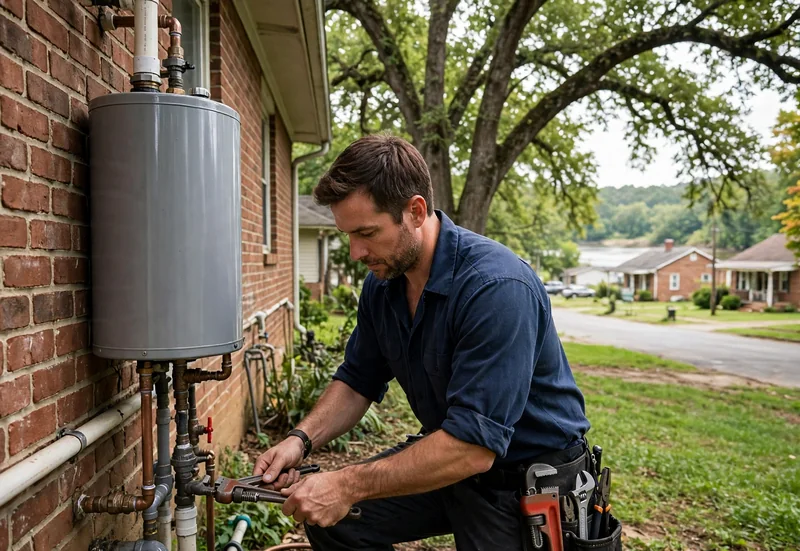
Rust and moisture are the serious signs
Rusty water that appears only on the hot side points at the tank itself, usually a spent anode rod and a tank starting to corrode from inside. You cannot un-rust a tank. An anode replacement can slow the process if the tank is otherwise sound.
Water or rust streaks at the base are the sign to take most seriously. Tanks leak from the base when the inner tank has corroded through, and that failure does not heal. It grows, sometimes slowly, sometimes all at once on a Saturday night.
Age and repair math
Most tank heaters last 8 to 12 years, with hard water pulling toward the low end. Look at the serial label: the first digits usually encode the month and year of manufacture. Past ten years, price every repair against replacement, not against zero.
A practical rule: if a repair costs a large share of a new unit and the tank is past ten, the money usually does more work in a new heater with a fresh warranty than in one more year of an old tank. We will run that math with you out loud.
Plan the replacement before the emergency
A planned replacement lets you choose: same size or bigger, tank or tankless, and a time that suits you. An emergency replacement means cold showers, possible water damage, and whatever unit is on the truck.
If your heater shows two or more signs on this page, call for an assessment. Worst case, you get a flushing and a few more good years. Best case, you replace on your schedule instead of the tank's.
Quick Reference
| Situation | Likely cause or next step |
|---|---|
| Rumbling or popping | Sediment; flush or plan by age |
| Rusty hot water only | Anode spent; tank corroding |
| Moisture at base | Tank failure starting; act soon |
| Age 10-plus, repairs rising | Replacement usually wins |
Related Reading
Services That Help
Questions about your own house? Call (615) 583-1830 and describe what you are seeing. We would rather talk it through than have you guess.