Local Guide
Cumberland River Flooding: Sump and Backflow Protection
Chapmansboro lives beside serious water.
Mon–Fri: 7AM – 7PM · Sat: 8AM – 4PM · 24/7 Emergency · Based at 3029 Sweet Home Rd, Chapmansboro
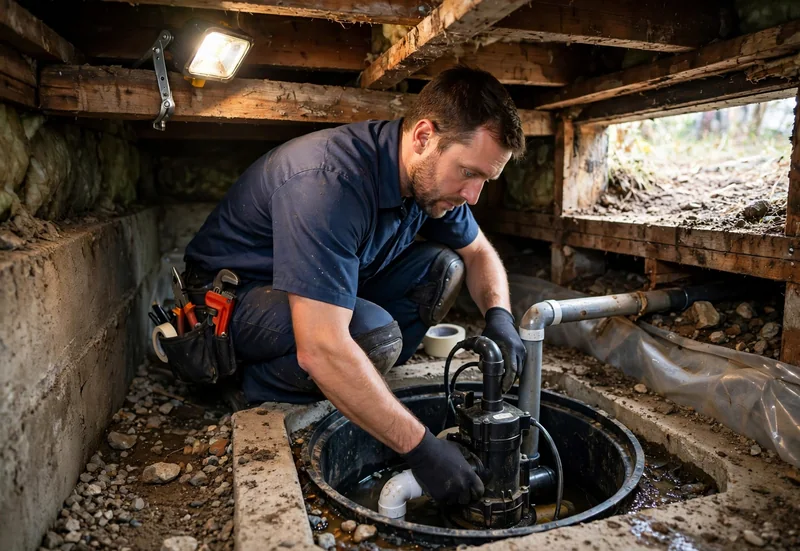
Chapmansboro lives beside serious water. The Cumberland River and Cheatham Lake border our low ground, Sycamore Creek threads through it, and about 52 inches of rain a year keeps the water table honest. Homes on the river bottom play defense against groundwater in a way ridge homes never have to.
This page is the river-bottom playbook: the sump system that handles everyday groundwater, the backup that covers storm outages, and the backflow and backwater protection that keeps high water and surcharged lines out of your lowest drains.
Know your water: groundwater versus river water
Most wet basements and crawl spaces here are groundwater, rain soaking down and pressing in through the floor and walls as the water table rises. That is the sump pump's job, and it is a winnable fight. Direct river flooding is a rarer, bigger event that no pump outruns. Knowing which problem your house has decides where money does any good.
The sump system, done completely
A working system is four things: a pit where water collects, a pump sized to how fast your pit fills in a storm, a check valve so pumped water does not fall back in, and a discharge that deposits the water downhill and away from the foundation. Skip any one and the others underperform. Add a battery backup, because the storms that fill pits fastest are the ones that drop the power lines, and a silent pump during an outage is just a hole in the floor.
Backflow and backwater: guarding the drain side
When outside water levels rise, drains can run backward. A backwater valve in the building drain closes against that reverse flow and protects your lowest fixtures, the ones that flood first. Separately, backflow preventers on irrigation and service connections protect the water supply itself and are required by many providers. The two devices guard opposite directions, and river-bottom homes often need the conversation about both.
A spring routine for river-bottom homes
Test the pump with a bucket before the spring pattern sets in. Check the backup battery and alarm. Walk the discharge line and clear its outlet. Confirm the backwater valve, if you have one, is accessible and serviced. Then sleep through the March rains the way your ridge neighbors do.
Related Services
More Local Reading
Frequently Asked Questions
Usually a combination: a correctly placed sump pit and pump, a discharge that carries water well away from the house, and gutter and grading fixes that stop sending roof water at the foundation. We assess which parts your house needs rather than selling the whole list.
A backwater valve sits in your drain line and closes when water or sewage tries to flow back toward the house during high water or a surcharged line. River-bottom homes with low fixtures benefit most. If your lowest drains sit near flood levels, it is a serious conversation.
A charged battery backup pump typically runs for hours of cycling, which covers most storm outages here. The alarm tells you it is working on battery so you know the clock is running. Testing it before storm season is part of the plan.
No. A sump system manages groundwater, which is the everyday problem, but river flooding is a different event. Keep whatever coverage your risk and lender call for; the pump is protection, not a policy.
Protect people and electricity first: keep clear of water near outlets and panels. Then call us for emergency help. If it is sewage backing up, stop running water and washing machines immediately, since everything you drain joins the backup.
Need a plumber in Chapmansboro today?
Tell us what you are seeing and we will talk through the likely cause, the fix, and what it typically costs before any work starts. No pressure and no surprises.
Mon–Fri: 7AM – 7PM · Sat: 8AM – 4PM · 24/7 Emergency
Brands We Service
Moen Delta Kohler American Standard Rheem Bradford White A. O. Smith Navien Rinnai TOTO Gerber Sloan Zurn
We repair and install fixtures and equipment from these makers every week in Cheatham County. If your brand is not listed, call us anyway. We can usually source parts or offer a like-for-like replacement.